The Illusion of Being Impressive
Integrity, Courage, and the Power of Showing Up Over Time
Trivia question:
Who is the reigning Air Guitar Champion of the World?
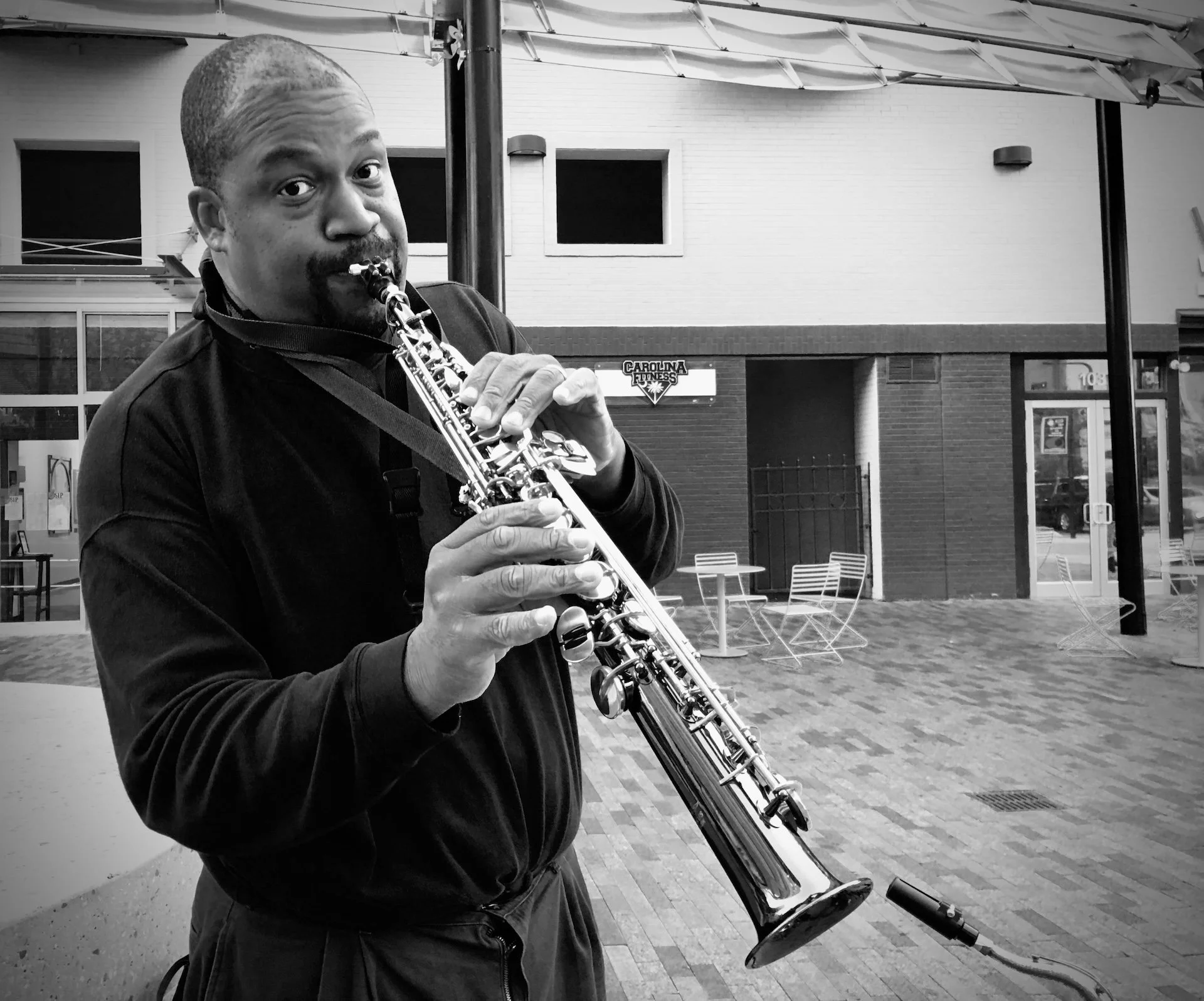
This is a busker in my town. To be clear: He is truly an impressive musician. Probably because he followed he framework below.
This sounds like something I might’ve asked my 12-year-old friends back in 1980. But apparently, there’s been an actual competition—and reigning world champions—since 1996 (except for 2020, when no event was held due to the COVID-19 pandemic).
Every year, air guitarists from around the world gather in Oulu, Finland, to compete for the top spot in the imaginary riffing universe. There’s no cash prize because the entire competition is about promoting world peace through air guitar.
“The purpose of the Air Guitar World Championships is to promote world peace. According to the ideology of the competition, wars would end, climate change stop, and all bad things disappear if all the people in the world played the Air Guitar. This is why the whole universe is invited to play the Air Guitar for world peace at the end of the competition.”
MAKE AIR, NOT WAR
The winner receives a custom-made Flying Finn guitar (a real guitar!), which is ironic—you can win this competition without knowing how to actually play a real instrument. The whole thing centers on performance, showmanship, joy, world peace, and a healthy dose of the ridiculous.
(Oh, and this year’s champion is a Canadian who goes by the stage name “Ichabod Fame.” He does, in fact, play bass guitar in a band.)
This isn’t a dig at performers. Not even at those who take part in air guitar competitions. But there are probably some people who’ve spent decades learning to master a real guitar who see this with a touch of cynicism.
What Is Real Greatness?
It’s a tougher question than it used to be. We live in the age of Insta-greatness and performative posturing. It’s everywhere—from social media influencers peddling “wellness products” using airbrushed selfies, to ketamine-fueled billionaires wielding chainsaws onstage purporting to cut government waste.
Greatness has been fragmented into filtered soundbites, 30-second reels, and curated glimpses of whatever we want people to see. It’s entirely possible to fool the world into thinking we’re great at something—or just generally great overall. Generative AI can even assist in the charade.
The whole landscape makes cynicism an easy companion.
So, what is greatness?
I’m not sure this is a complete definition, but here’s what I see:
1. Integrity in Private
Virtue signaling is always a public act.
David Brooks talks about this in The Road to Character, where he contrasts “résumé virtues” and “eulogy virtues.” Résumé virtues are what we want people to see:
I’m a good person.
I’m talented.
I’m someone you want on your team.
I’m someone you need in your life.
Eulogy virtues are different. These are the things people closest to you know to be true. They can’t be faked or curated. It’s who you are when no one’s watching—except those who really know you.
Eulogy virtues are far more important than the résumé virtues we parade around on LinkedIn or Instagram reels.
2. Courage in Public
Billy McFarland is infamous for a masterclass in performative greatness. His 2017 Fyre Festival was billed as a luxury music experience on a private Bahamian island—complete with supermodel-packed promo videos, beachfront villas, and gourmet catering.
He sold 5,000 tickets, priced from $500 to $12,000 each.
Roughly 600 people showed up to a disaster zone: disaster-relief tents instead of villas, soggy cheese sandwiches in Styrofoam boxes, and canceled music acts. There were no bathrooms, no organization, and no way off the island for some.
Fyre Festival wasn’t just a logistical failure—it was the collapse of hype without substance. McFarland leaned hard on influencer culture and elite branding to sell a fantasy, and he ended up in prison for fraud.
(Wildly enough, he’s planning another Fyre Festival for June 2025. Caveat emptor, indeed.)
Courage in public is the opposite of public performance.
It’s Rosa Parks staying seated on the bus.
It’s the man who stood in front of the tanks in Tiananmen Square.
It’s Malala Yousafzai standing for girls’ education.
It’s Volodymyr Zelenskyy refusing to evacuate his country with a target on his back.
Courage in public can also be more ordinary—like admitting when we’re wrong and taking ownership of our mistakes.
“Humility is the awareness there’s a lot you don’t know and a lot of what you think you know is distorted or wrong.”
—David Brooks, The Road to Character
3. Faithfulness Over Time
Generative AI is a helpful tool for non-essential hard work. The danger is using it for the essential work—the kind that forms us. The work of developing a craft.
Someone could do all their writing with generative AI and it would likely be passable. But writing is a craft. If a tool doesn’t help me grow in the craft, what’s the point?
Writing is thinking. If I skip the thinking, what value am I really bringing? It becomes performative—about word count, clicks, likes, and shares.
Like learning to actually play guitar, or writing, or any kind of meaningful labor—greatness in a craft (or a calling) takes time.
I was talking about this with a colleague recently, and we ended up landing on this:
Consistent mediocrity is better than occasional greatness.
It’s counterintuitive, but ultimately the only path to real greatness. We have to do the reps. Whether it’s the gym, a podcast, or weekly essays on Substack.
The absurdity of a World Air Guitar Championship is undeniably fun. But I’d venture to say the greatness of “Ichabod Fame” isn’t in his world-class air guitar performance—it’s in the fact he actually plays the bass.
Remember: Make air, not war.
And as always, you’re doing better than you think.
Double-click to edit...